







Best Specialty Grocery Point of Sale Systems 2026
If you think a small grocery footprint holds your store back, think again. With the right layout, it can become one of your biggest strengths — guiding shoppers naturally, highlighting the products that matter, and creating a shopping experience that feels intentional from the moment customers step inside.
You don’t need wide aisles or endless shelving; you need smart product choices, clear organization, and point of sale (POS) tools that show you exactly what your shoppers respond to.
Here are five pro tips for designing a small grocery shop layout that maximizes limited space, boosts your sales, and keeps shoppers engaged every time they walk in.
1. Choose a Manageable Product Mix That Fits Your Space
Small shops succeed when every product serves a purpose. When shelves feel cluttered, shoppers get confused. When the assortment is intentional, your store feels organized and trustworthy.
To curate your product selection:
-
Stock core basics: Prioritize everyday essentials — such as bread, eggs, rice, and produce — and make them easy to find. Layer in one or two variations to offer choice without clutter.
-
Build your inventory around your community: Offer the staples your neighborhood expects, whether that’s halal meats, South Asian spices, Latin pantry items, or organic favorites.
-
Rotate items to keep shelves fresh: Introduce new snacks, sauces, or seasonal produce in small batches to keep the shelves fresh without overcrowding.
-
Select packaging that fits your space: Choose brands with stackable cartons, upright pouches, or square canisters so you can face shelves quickly and keep displays tidy.
Carefully chosen inventory defines your grocery market’s identity and attracts customers who value what you offer.
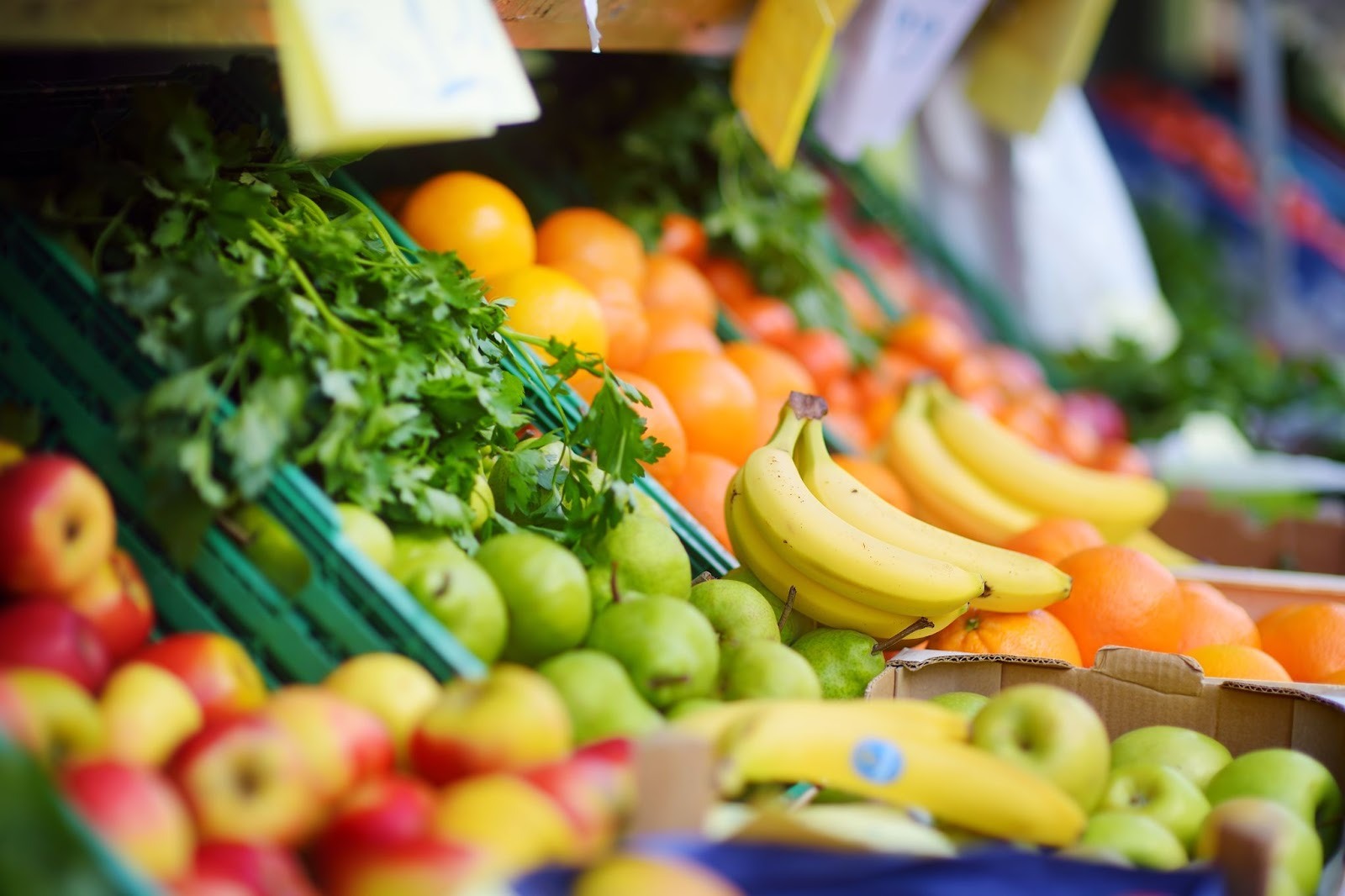
2. Build Displays That Look Full Without Damaging Your Products
Full displays look great, but overcrowding leads to bruised produce, crushed packaging, and unnecessary shrinkage.
Ethylene-producing fruits — like avocados and bananas — ripen even faster when stacked tightly or under heavy layers.
Use these tips to keep grocery displays full without damaging your products:
-
Limit stack height for delicate items: Keep tomatoes, peaches, plums, and soft citrus to one or two layers to prevent soft spots and collapsing under pressure.
-
Use low, wide bins to spread weight: Lay items out in shallow trays or produce crates so they spread naturally rather than piling upward.
-
Angle displays for visibility: Set trays at a gentle tilt to create fuller-looking displays with fewer units, encouraging customers to choose the front items first.
-
Add padding to protect impact points: Place mats or foam inserts in your bins to cushion products and prevent them from rolling when foot traffic increases.
Food retailers lose around 3% of annual sales due to shrinkage. These strategies help you maintain a fresh and appealing selection while minimizing preventable product loss.

3. Organize Shelves So Shoppers Can Find What They Want
A clean and organized small grocery shop layout helps guide customers through the store and influences what they choose to buy. Products placed at eye level can sell up to 80% better than items on lower shelves, and strong promotional displays can boost sales by over 500%.
To make grocery aisles easy to read and fast to navigate:
-
Group items by purpose: Put pasta with sauce, rice with beans, and crackers beside spreads or nut butters to create easy grab-and-go combinations.
-
Prioritize eye-level real estate: Position your higher-margin and priority items between waist and eye level, and place value or bulk options lower on the shelf with overflow stored higher.
-
Turn endcaps into spotlight zones: Stage seasonal picks, weekly promotions, and new arrivals at aisle ends where they catch attention.
-
Color-code and label sections clearly: Color-code and label every section clearly to help shoppers understand the layout.
Face your aisles several times a day; even a quick reset keeps the space feeling open, organized, and easy to shop.
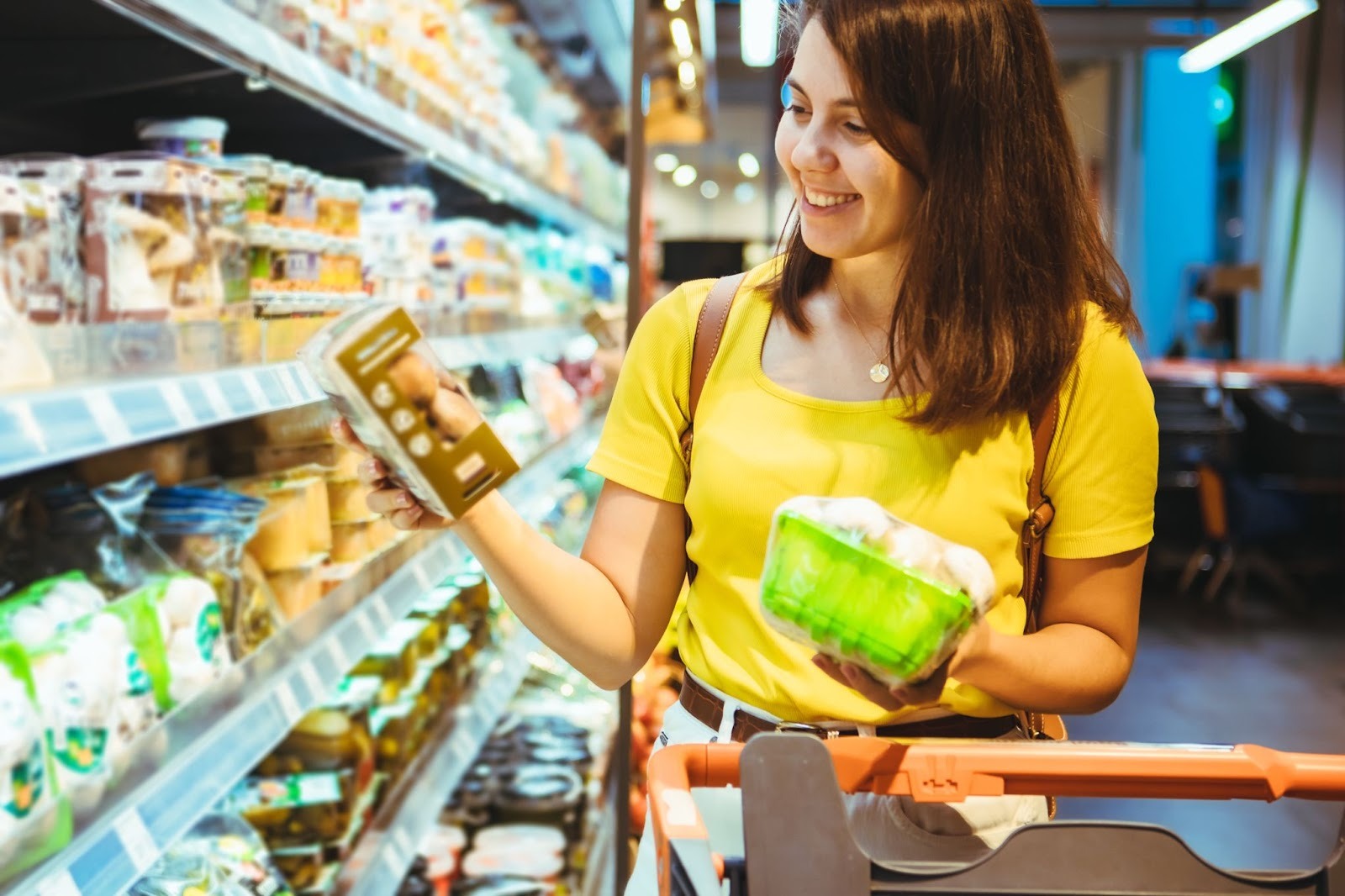
4. Create a Traffic Flow That Naturally Moves Shoppers Through Your Store
Tight spaces fill up fast. A good small grocery shop layout keeps shoppers moving, eases pressure points, and encourages bigger baskets.
Here’s how to create a smoother flow in your grocery shop:
-
Set a clear path with your layout style: Pick a herringbone, loop (racetrack), or spine blueprint to guide shoppers forward.
-
Create a small decompression zone: Leave a little open space just inside the door. It gives customers a moment to adjust and explore what the store has to offer before they begin shopping.
-
Position high-margin items to the right: Capitalize on the 90% of shoppers who instinctively turn right by staging your best-margin products in their first line of sight.
-
Study how shoppers move: Review heatmaps and in-store patterns to see where customers pause, rush through, or skip entirely.
Use your POS sales reports to refine your layout. They show you the dead zones, the high-visibility spots, and the sections where promos always perform well.
5. Let Your POS Guide Layout, Ordering, and Improvements
You don’t have to guess what belongs on your shelves. Your grocery POS software shows you what sells, what builds baskets, and where shoppers naturally linger.
A grocery-specific point of sale solution lets you:
-
Identify power categories: Pull out top sellers — such as lunchbox items, ready-to-heat meals, or daily essentials — and position them where shoppers look first.
-
Track dwell times: Flag shelves where shoppers pause and turn those attention hotspots into placement for higher-margin items.
-
Refine order sizes: Match your purchase orders to actual sales patterns to avoid overstocking while keeping essentials in stock.
-
Test changes and compare weeks: Measure how each layout change affects sales so every adjustment is based on real results.
When your layout choices are based on real data, your store can adjust to how customers actually shop — and your daily sales will reflect it.
Design a High-Performing Small Grocery Shop Layout With Markt POS
Small stores can’t afford wasted space. The right layout keeps your shop organized, helps customers feel comfortable, and drives stronger day-to-day sales.
Markt POS gives you the data to make every layout decision count. It highlights your top-performing categories, shows you how shoppers navigate your grocery store, and provides clear traffic reports that you can act on. You’ll also spot ordering trends, weak zones, and the products that deserve your most visible shelf space.
Want a small grocery shop layout that works harder for you? Schedule a live demo to see how Markt POS helps you maximize every inch of your store.


Luke has been in the grocery industry for 15 years. Starting out as a POS technician, he worked his way up to VP. Luke has seen, adopted, and even contributed to significant technological advancements, such as moving from server-based systems to cloud solutions with Markt POS and the AI revolution transforming store operations. Luke is our resident expert for all things grocery store and point of sale technology. “Store owners spend too much time on paperwork instead of building their business. After helping my best friend's father run his grocery store, I made it my mission to give hardworking store owners better tools to succeed.”