







Best Specialty Grocery Point of Sale Systems 2026
Which shopping experience sounds better — a massive warehouse with bright lights, maze-like aisles, and crowded checkout lines, or a smaller, curated store with friendly staff offering tailored recommendations?
Many folks prefer the latter. And yet, millions choose to shop at big-box chains for their perceived convenience, pricing, brand familiarity, or simply because a coupon popped up on their phone.
Even with these pressures, local markets continue to hold their own in 2026. With 68% of shoppers choosing independent stores for freshness, there’s clearly a demand for local products and personal service.
This article explores what consumers expect from independent markets compared to big-box retailers, and how small businesses can meet those expectations while retaining the personal touch that sets them apart.
How Do Customers Decide Where To Shop?
We make thousands of decisions every day, often without thinking. Choosing where to shop is no different — shoppers weigh what matters most to them, consciously or not.
Big-box stores attract people with their wide product selection, predictable pricing, and rewards programs. Bulk discounts appeal to households buying in larger quantities, and many shoppers enjoy the convenience of purchasing everything they need in one trip.
Related Read: How To Manage a Small Grocery Store: 7 Tips & Tools
Local markets draw shoppers for different reasons. People value personal service, fresh or unique products, and a connection to their community. Small Business Saturday and similar events highlight this appeal, directly supporting their neighborhood and keeping money close to home.
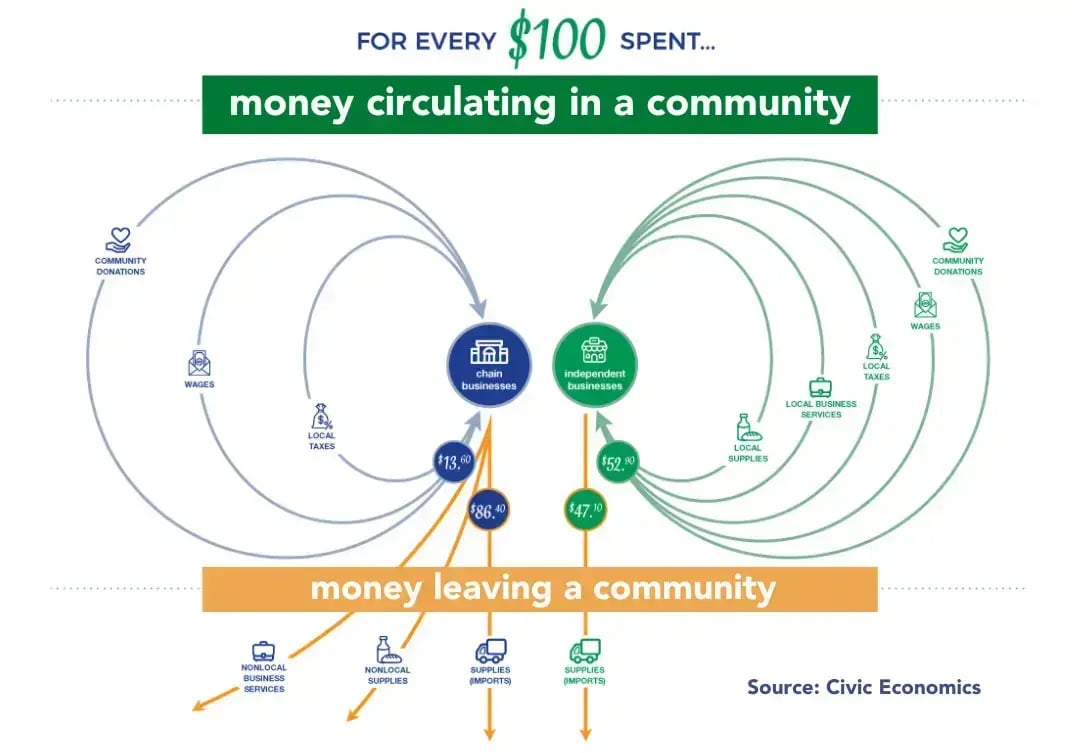
(Image source: American Independent Business Alliance)
While 29% of Americans favor local stores and another 29% stick with national chains, 82% shop at both, depending on the item — showing local markets have plenty of opportunity to win customers by providing the care, quality, and personal attention big-box retailers can’t match.
Let’s take a closer look at three areas where local markets can meet, or even exceed, shopper expectations.

1. Personal Connection
Shoppers don’t always notice it right away, but the way staff interact with them shapes the entire shopping experience.
Employees at smaller businesses have the opportunity to guide, advise, and remember customer preferences. Big-box staff, on the other hand, spend most of their time stocking shelves and running checkout, leaving little room for meaningful interactions.
The data backs this up — 36% of shoppers consider personalized service a deciding factor in where they shop, and 39% value building a relationship with the store owner.
Here’s how your market can leverage this strength:
- Use purchase history to suggest products tailored to each customer, rather than sending generic promotions.
- Greet regulars by name and chat about items they buy to make checkout conversations feel personal.
- Create a “Staff Picks” shelf featuring employees’ favorites, seasonal items, or products popular with repeat customers.
- Award bonus loyalty points when customers reach milestones, like birthdays, program anniversaries, or their 10th store visit.
Personal service doesn’t mean following customers all around the store. Often, it’s the quick, thoughtful moments — like remembering a favorite item, sharing a recipe tip, or just greeting someone by name — that make shoppers feel seen and valued.
The impact of this kind of service is so powerful that big-box chains like Trader Joe’s have tried to recreate the small-market experience across their locations.
You already have that advantage, with all the customer and purchase data you need in your point of sale (POS) system — no million-dollar budgets required.
2. Product Quality & Uniqueness
One of the biggest reasons folks choose to shop at small businesses is product quality. More than half of shoppers actively look for locally-made products, and 61% specifically choose gifts from independent stores because they offer something unique.
While major chains can compete on volume and price, they can’t match the authenticity or curated selections that independent markets consistently provide.
Here’s how your market can leverage this strength:
- Highlight local or regional products with visible signage or dedicated sections to catch shoppers’ attention.
- Rotate specialty items regularly to keep inventory feeling fresh and unique.
- Use POS-integrated inventory alerts to prevent stockouts on popular niche items.
- Monitor specialty item sales to see which products drive loyalty and are worth reordering.
- Offer small samples or demos for new or seasonal products to encourage discovery and repeat visits.
Grocery-specific POS software helps you keep specialty inventory counts accurate while showing which items sell fastest, where stock stands as new shipments arrive, and which seasonal or regional products are worth reordering — so your shelves reflect what customers actually want to buy.
Updates, counts, and reorders happen right in the system, without wading through spreadsheets, so your team can spend more time helping shoppers and less on tedious inventory paperwork.
3. Convenience & Modern Experience
Convenience is still incredibly important for many shoppers, especially younger buyers — over half of Gen Z say they would shop locally more often if checkout and payment felt faster.
Big chains have spent years tightening and refining these processes, but that doesn’t mean local markets need to copy every tactic. Instead, they just need to remove the relevant bottlenecks that send customers elsewhere.
Here’s how your market can close the gap:
- Accept tap-to-pay, mobile wallets, EBT, and split payments so checkout doesn’t stall when cards fail or balances fall short.
- Set up self-checkout kiosks to keep things moving smoothly during high-traffic periods.
- Send out digital receipts automatically so customers can leave quickly and still keep records for returns or budgeting.
- Keep shelf pricing accurate and easy to verify so customers don’t have to stop staff to double-check totals.
A good, convenient shopping experience often comes down to removing small points of friction. An industry-specific POS system ties those details together, making it easier to accept multiple payment types, keep pricing accurate, and offer more than one way to check out.
That way, speed never comes at the expense of service.
Keep Your Local Market Competitive in 2026
Shoppers weigh price, speed, and convenience against service, quality, and trust — and most move between local markets and big-box stores depending on the trip. This gives independents a real chance to stand out by highlighting what bigger chains can’t match.
A POS system built for grocery stores, like Markt POS, helps you deliver that experience. It tracks inventory, manages loyalty programs, prices fresh items accurately, and handles modern payments, all while keeping day-to-day interactions personal.
Schedule a free, personalized demo today to see how your market can meet shopper expectations without losing the personal touch that makes it special.


Luke has been in the grocery industry for 15 years. Starting out as a POS technician, he worked his way up to VP. Luke has seen, adopted, and even contributed to significant technological advancements, such as moving from server-based systems to cloud solutions with Markt POS and the AI revolution transforming store operations. Luke is our resident expert for all things grocery store and point of sale technology. “Store owners spend too much time on paperwork instead of building their business. After helping my best friend's father run his grocery store, I made it my mission to give hardworking store owners better tools to succeed.”