







Grocery Store Inventory Management Basics: 12 Tools & Techniques
International markets have different needs than a generic retail store, and the technology running them needs to keep up with your business.
Many owners find themselves trying to retroactively fit a system to their operations rather than the other way around. Generic retail point of sale (POS) platforms prioritize breadth over depth — they work fine for a boutique or a gift shop, but when you push them into specialized territory, the gaps show up fast.
This article covers the differences between a generic and an international market POS system, the must-have features, and how to find the right fit for your business.
Why Your International Market Needs an Industry-Specific POS System in 2026
On the surface, it may seem like there isn’t much separating a POS system built for international markets from a generic retail setup — they both accept and process payments, so why do you need something specialized?
But the real feature gaps start to show up in your day-to-day, especially for markets with weight-based sales, perishable inventory, and prepared food operations.
Generic systems may be able to add SKUs and run a sales report, but they often can’t track inventory by cut type, grade, and expiration date, integrate directly with your scales, or connect your retail floor to your deli counter.
For a carniceria, a South Asian grocery, or a Middle Eastern market with an attached bakery, that missing functionality ultimately costs you time, accuracy, and revenue.
Generic vs. International Market POS: What’s the Difference?
Generic retail systems handle basic transactions. You can add and update products, connect peripherals like printers and scanners, and pull basic reports on sales and taxes. For many stores, that’s enough — but international markets have more demanding requirements.
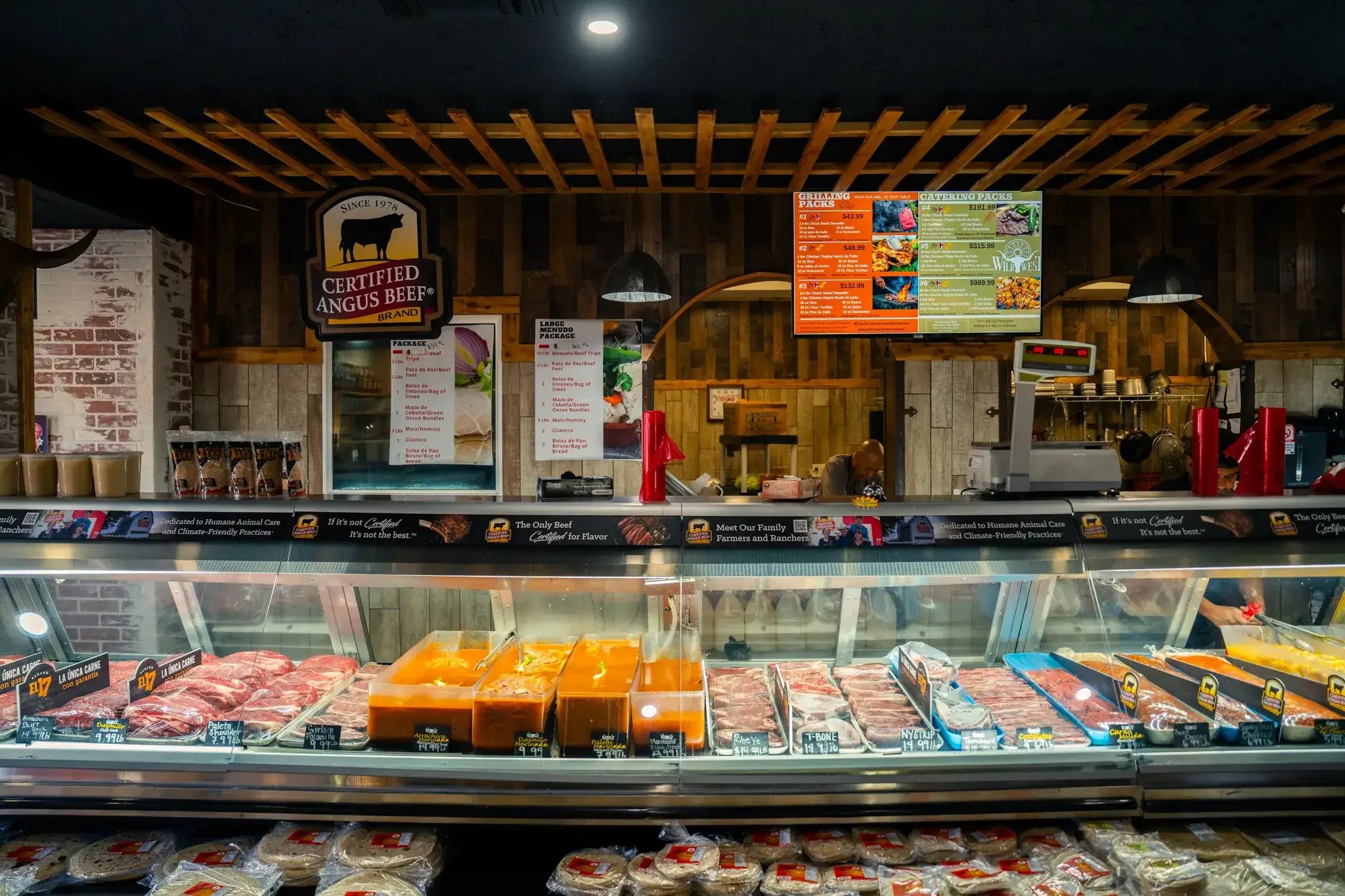
(Image source: Wild West Carniceria)
Let’s say you run a carniceria. A generic POS system would struggle in key areas that make running your store easier, such as:
- Weight-based pricing: You need to closely track the variable weights and costs of custom meat cuts. Without integrated scales, you’d have to manually enter weights, which can lead to errors.
- Flexible inventory tracking: Generic POS systems might not offer the flexibility to track meat inventory by cut type, grade, weight, and expiration date. And that’s before you account for Mexican beers, cheeses, produce, hot sauces, and tortillas also on your shelves.
- Robust reporting: A carniceria needs reports by meat type, grade, and product — without that granularity on specific cuts, you won’t know what’s selling or when to replenish inventory.
- Customer loyalty: Without integrated loyalty software, you have no reliable way to reward regulars with the discounts and incentives that keep them coming back.
Replace a carniceria with an East Asian, South Asian, or Hispanic market, and you’ll still run into many of the same problems. The product categories may change, but the operational demands don’t.

International Market POS Features To Look For
A dedicated international market POS system gives you integrated tools designed for markets like yours, instead of disconnected systems and manual workarounds.
Before going into any demos, make sure whichever system you’re assessing has these features.
Inventory Management Built for Your Product Mix
You might source products directly from suppliers abroad — spices, produce, specialty meats, and other perishables with tight expiration windows. You need inventory management that lets you track those items by cut, grade, weight, and date.
Related Read: How To Improve Inventory Management for Small Grocery Stores
Custom label printing means customers know exactly what they’re getting — and batch label creation lets you print labels for an entire shipment at once, rather than one item at a time.
Support for Fresh and Prepared Foods
If your market includes an attached deli, restaurant, butcher shop, or prepared food kiosk, those operations need to connect seamlessly to your main inventory.
When kitchen staff can see all available proteins and produce on the retail floor in real time, they can plan production accurately. Butcher managers can get low-stock alerts before they run out of customer favorites.
Related Read: How Hot Food Is Helping Grocery Stores Compete With Restaurants
Having a shared, interconnected system means fewer surprises across all departments.
Integrated Customer Loyalty
Part of managing an international market is catering to your customers’ specific needs and culture. You want your store to be the go-to place for your community — and a loyalty program is one of the most direct ways to get there.
An international market POS with built-in loyalty lets you set up points programs, exclusive discounts, and tailored promotions without a separate platform.
It keeps your store top of mind, rewards the regulars who already love what you carry, and gives shoppers a reason to come back over a competitor down the street.
Hardware That Fits Your Operations
Getting the right POS goes beyond the software alone. For international markets, a complete hardware setup should include:
- Weighing scales: A POS with direct scale integration automatically calculates the price by weight and prints a barcode label, so there’s no manual entry or pricing errors at the register.
- Advanced checkout hardware: Customizable touchscreens, support for multiple payment types, and an interface your whole team can learn quickly makes all the difference when lines are long.
- Barcode scanner: Without a scanner connected to your POS, staff must manually look up products at checkout, which can slow the line and introduce inventory count errors.
- Thermal receipt printer: A printer that isn’t integrated with your POS means receipts don’t reflect real transaction data, which creates problems for returns and reporting.
- Customer-facing display: A display on the customer side of the counter gives shoppers a clear view of every item and total, so nothing gets missed before they pay.
Hardware needs vary by store size, layout, and budget, so look for a vendor that lets you configure a setup that actually fits your operation rather than locking you into a fixed bundle.
And whatever you land on, make sure 24/7 support is part of the deal — if a scale or scanner goes down mid-shift, you need someone who can get you back up fast.
4 Tips To Choose an International Market POS System
Choosing a POS system is a decision worth taking time on. Here are four practical tips to help you find the right fit:
- Start with your non-negotiables. What capabilities does your store absolutely require? Think through your departments, product types, store size, and the specific pain points and use that list to evaluate every vendor.
- Look for vendors built for your industry. The biggest name in POS isn’t always the best fit for a specialty food market. Watch actual customer case studies, compare feature lists side by side, and read reviews from store owners in similar verticals before getting on a sales call.
- Demo with your actual use cases. Bring real scenarios to your demo — how you price meat by weight, how tax applies to prepared foods, what a busy Saturday looks like at your register. The right vendor should have a clear, confident answer for every one of them.
- Understand the full cost of ownership. Clarify upfront costs like hardware and setup fees, ongoing software costs, and what’s included in your support plan before committing to anything.
Most business owners focus on features and price, but what happens after you sign matters just as much.
Ask every vendor upfront what onboarding looks like, how long setup takes, and whether they include staff training. A slow or unsupported implementation can set your store back more than you'd expect.
Getting the Right POS System for Your International Market
Running an international food market is no small feat. You work long hours, manage complex inventory, and serve a community that depends on you for the right products at the right time — your POS system should be the tool that ties all of that together.
An industry-specific system like Markt POS gives you an all-in-one solution — scale integration and weight-based pricing built into checkout, offline capability so operations don’t stop when the internet does, and multilocation management that connects all your storefronts under one account.
Schedule a free, personalized demo today to see how Markt POS fits your international market’s needs.


Luke has been in the grocery industry for 15 years. Starting out as a POS technician, he worked his way up to VP. Luke has seen, adopted, and even contributed to significant technological advancements, such as moving from server-based systems to cloud solutions with Markt POS and the AI revolution transforming store operations. Luke is our resident expert for all things grocery store and point of sale technology. “Store owners spend too much time on paperwork instead of building their business. After helping my best friend's father run his grocery store, I made it my mission to give hardworking store owners better tools to succeed.”