





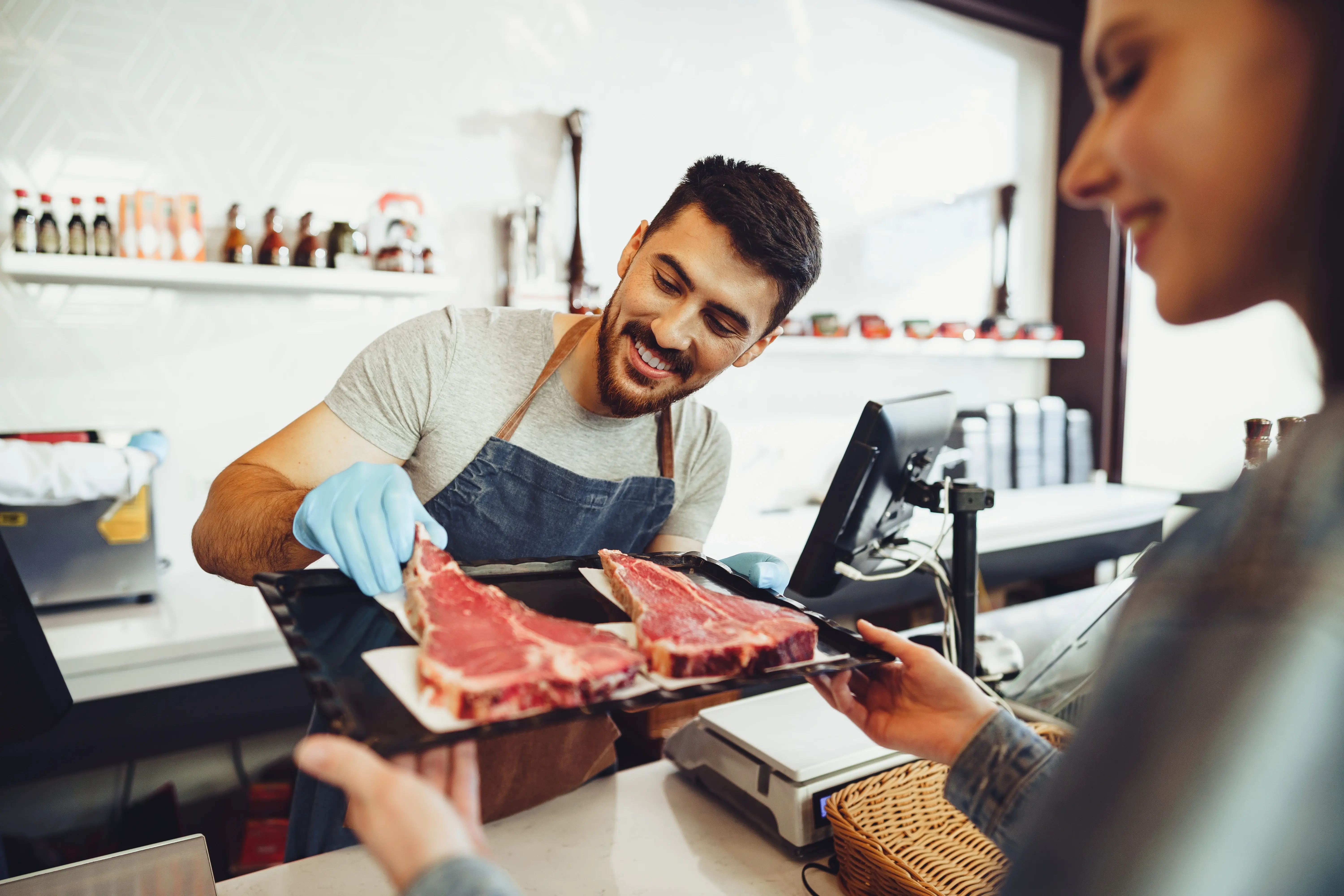


Starting a butcher shop means building a business that’s as sharp behind the counter as it is on the cutting board. Whether you’re a seasoned pro or just getting your cleaver wet, even minor missteps can turn a prime opportunity into a costly grind.
Thinking About Making a Meat Shop Investment
Running your own specialty butcher shop involves far more than just cutting meat.
Owners have to manage inventory, prepare quality cuts, clean, offer quality customer service, keep up with bookkeeping, hire staff, and implement store marketing. These responsibilities take serious time and effort, even with a fantastic team supporting you.
The last thing a shop owner needs is to worry about back end business operations that should run smoothly without daily oversight. Mundane tasks like manually updating inventory every time a purchase is made, tracking customer purchase history, and calculating sales tax can quickly eat up precious hours. You know your time is better spent interacting with customers, sourcing products, or planning your next marketing campaign.
How can you get that precious time back?
This is where the right point of sale (POS) system becomes invaluable. The right point of sale solution can be a personal assistant for all your core business processes. The best systems are customized for specialty food establishments like butcher shops, with features to automatically handle much of the routine work for you.
With a modern POS system, your inventory levels update in real time. You can also manage packaged cuts, per-pound items, and house-made goods in one interface. With a strong point of sale solution, your system tracks purchase history and generates reports to reveal customer buying patterns.
With automation powering the basics, owners can better focus their energy on business strategy, customer relationships, and product quality. The system acts like the behind-the-scenes office manager you've always needed. Rather than getting bogged down handling payroll, the owner is out front recommending the perfect steak for date night.
Investments, Inventory, and Tools: Startup Basics for a Meat Shop
Owning a local meat shop is a great way to use your skills while connecting with farmers and customers. However, preparing for opening day is essential by investing in the right things and thoughtfully choosing your inventory and operational tools.
Here’s a list of some key must-haves to get you started.
Key Meat Shop Investments
Launching a specialty butcher shop requires significant upfront investments. You aim to create a space tailored to quality meat offerings and exceptional customer service. Let’s look at a few of the significant costs you must prepare for upfront:
- Commercial Real Estate:
First, you need a location for your storefront. When budgeting for this cost, factor in monthly rent, maintenance fees, insurance, taxes, and utilities. Location directly impacts visibility and foot traffic, so thoroughly review area zoning laws and parking availability. - Refrigerators & Freezers:
You’ll have trouble prepping or selling anything other than jerky without the right refrigeration units. From walk-in cold storage units and display cases to counters and blast chillers, precise temperature control across different units is mandatory for freshness and food safety. Refrigeration needs vary based on meat varieties, whether you process whole carcasses on-site, or make prepared foods, so design your in-store refrigeration to your workflows. - Safety & Sanitation Equipment:
All employees will need gloves, hair/beard nets, cut-resistant aprons, anti-slip boots with steel toes, and much more to protect and keep your work environment sanitary. Provide separate hand washing stations, sterilization units for knives/saws, sanitizer sprays, temperature-controlled cleaning sinks, and tools like bandage cutters for safety. - Licenses, Permits, & Certifications:
Another essential upfront investment is your licensing. Licenses and permits vary by area, but you’ll likely need a business license, commercial food seller permits, and state meat handler licenses. Depending on your municipality, you should also budget for hazard analysis training, health and sanitation inspections/approvals, local fire approvals, and more.
Related Read: How To Open a Retail Store: 7-Step Checklist
- Custom Build-Out & Shop Design:
Invest in lighting, display cases, flooring, signs, layout, and architectural details that enhance the in-store experience and your brand aesthetic. - Insurance Requirements:
Insurance is another often-overlooked business startup cost. General liability, workers' compensation, food product liability, and more are essential coverage for any business. Be sure to get all the right coverage before opening your doors to the public. - POS Software & Hardware: A point of sale system tailored to the workflows of butcher shops is critical for your success. Look for a solution with features like barcode scanning, digital ordering, scale integrations, custom label printing, and advanced inventory management. Investing in the right solution will provide dividends over time in customer service and back office efficiencies.
These upfront costs and investments are significant, and can feel overwhelming. Still, remember that cutting corners upfront will set you up for struggles down the line. Instead, carefully research all anticipated costs and include contingencies in your business plan.
Want to build a shop that serves up more than just great cuts? Start smart. Here are six common butcher shop mistakes that could sabotage your success — and how to avoid them.
Starting a Butcher Shop in 9 Steps
1. Choose Your Concept
First, you need to choose your concept. You may be saying, “I’ve already chosen my concept: I want to open a butcher shop.” But not all butcher shops are the same.
Before diving in, decide on your target audience and product offerings. Offerings can vary greatly based on location, customer base, and types of meats available from your farmer and rancher partners.
Related Read: 6 Unique Features of a Seafood Market POS
Some options for butcher shop concepts include:
- Traditional Meat Market: Focus on beef, pork, poultry, lamb, and popular cuts. Cater to household grocery needs.
- Specialized Shop: Consider a vegan butcher shop with plant-based proteins, a kosher or halal certified shop adhering to religious guidelines, or other niche offerings.
- Artisan Butcher: Feature sustainably raised, whole-animal butchery and housemade charcuterie to draw in foodie crowds.
Research different butcher shop models, local demand in your area, expected revenue ranges, and costs to narrow down the best concept for your skills and market. Selecting a defined niche and tailored offerings from the start allows you to best serve a target demographic.
2. Make a Business Plan
Once you’ve determined your niche, you’re ready to make your business plan. A solid business plan outlines your objectives, forecasts, budgets, and more. This document is essential for obtaining financing and adequately planning your shop's launch.
Some of the key sections to include in your plan are:
- Executive Summary: overview of concept and projected success
- Menu & Offerings: details on types of cuts and products
- Management & Ownership: key staff and leadership structure
- Staffing Needs: number and roles of team members
- Marketing Strategies: plans to promote your shop
- Financial Projections: expected costs, investments, profits
Unsure of where to get started drafting your business plan? Consult Small Business Administration (SBA) templates to start, and communicate with mentors to review your butcher shop's plan. An expert can help you strengthen areas to ensure you're set up for success before taking the leap.
Related Read: How To Open a Business in Florida: 8 Simple Steps
This step may feel unnecessary or tedious, but when you invest time upfront to make a solid business plan, you set yourself up for success and make it easier to get funding for your startup costs.
3. Get Your Financing in Order
Speaking of startup costs, the third step to starting your butcher shop is to get your financing in order. Securing financing covers your startup costs and early operating expenses, helping avoid high-interest debt or giving up too much equity.
What are your financing options? You can consider the following:
- Small Business Loans: Pursue loans from government-backed lending programs for qualifying businesses.
- Conventional Business Loans: Apply for bank or credit union business loans or lines of credit.
- Private Equity Investments: Give up partial ownership for investor funding.
- Personal Savings: Self-fund all (or a portion of) startup costs.
- Crowdfunding Platforms: Raise small investments from a large number of supporters using platforms like Kickstarter or GoFundMe.
Determine how much funding you need to cover all expenses in your plan, from real estate to equipment to inventory. Speak to a business banker or attorney to discuss the best financing solutions for your butcher shop’s circumstances.
4. Apply for the Necessary Licenses
Legal compliance is mandatory before you can open your doors. As a result, step four of how to start a butcher shop is applying for the necessary licenses you need to operate a legally compliant butchery.
Related Read: What License Is Needed To Open a Butcher Shop? (+ 6 Tools Your Store Needs)
Your license requirements will vary based on your state and locality, but basic requirements typically include:
- Business License: a license that requires you to register your business name and structure legally
- Employer Identification Number (EIN): an identification number for your business, used for tax purposes
- Seller's Permit: a permit required to collect sales tax in most states
- Health Permit: a permit that signals approval from health department to sell food
- Food Retail License: a state license for general food retailers
- Meat Establishment License: a special permit required to sell specific meat products
Consult a business lawyer and your city clerk's office to learn about your region's needed licenses and permits. Each locality has different rules. Remember that applications can take 30 to 90 days to go through the approval process; submit all applications early to ensure timely approvals, so you can open on schedule.
5. Find Your Storefront Location
Choosing the right location is vital for solid visibility, foot traffic, and accessibility to attract customers. A poor spot or one too close to competing butcher shops can severely limit business, so location scouting is crucial.
Ideally, look for retail spaces that have:
- Adequate space for both browsing customers and deliveries
- Vehicle accessibility, including rear truck access for suppliers
- Appropriate distance from grocery chains. Choose a location far enough to avoid direct competition.
Research similar businesses in your target area to understand customer demographics and habits. Look at traffic patterns, zoning, parking, and delivery routes to determine the location that will drive the most business to your new butcher shop. Location is one of the most critical pieces of the puzzle when starting a brick-and-mortar business, so be sure to give this step the careful consideration it deserves.
6. Hire Your Team
With a location, permits, and a plan, you’re ready to hire your dream team! Skilled staff are crucial for seamless daily operations and high-quality service. The right hires make all the difference. Essential roles to fill include:
- Butchers: These staff members need to be knowledgeable about different cuts and skilled in seamlessly breaking down carcasses.
- Managers: Supervisory staff will oversee your teams and operations. Choose managers with strong leadership and customer service skills.
- Front-of-House Staff: Your front-of-house workers are the friendly faces that interact with patrons. Ensure you select hard workers with strong people skills.
- Cooks/Chefs: If you have prepared foods or an on-site kitchen, you will need in-house cooks or chefs. These staff members prepare those menu items.
- Packers & Loaders: These workers are back-of-house staff who handle shipments and inventory.
- Back Office: Additionally, hire administrative back office workers to help with bookkeeping, HR, and marketing help.
Vet each candidate thoroughly before hiring. Check references to confirm abilities, especially for specialized roles like experienced butchers. Build a stellar team ready to provide excellent service when you open your doors.
Related Read: 5 POS Training Tips To Help Your Workforce Successfully Onboard
7. Choose a POS System
As we mentioned, a point of sale system is crucial for your business’ success. This tool will help manage every aspect of your business, from handling transactions and inventory to managing your customer loyalty programs. The right system acts like an extra set of skilled hands helping manage back end operations.
Key features to look for include:
- Detailed Reporting: Track bestselling items, profits, costs, ingredients, and other metrics to inform business decisions.
- Payment Processing: Securely accept credit cards, contactless payments, mobile wallets, cash, and more.
- Customer Profiles & Loyalty Programs: View purchase history and offer rewards to drive repeat business.
- Supplier & Order Management: Maintain vendor details and purchasing data.
- Employee Oversight: Manage user permissions and track transactions by employee to minimize shrinkage due to employee theft and monitor staff performance.
- Regulatory Reporting: Maintain compliance with health departments by implementing a solution with robust reporting features.
Remember that no solution is the right fit for every business. To find the right solution for your butcher shop, demo a few POS systems to find the one with features tailored to your workflows and compliance needs. The right software pays for itself in time and money saved.
Related Read: 5 Top Options for Meat Market POS Systems This Year
Markt POS is a point of sale solution built specifically for grocers and butcher shops. Our solution has all the features you need to run your specialty business and none of the expensive bells and whistles that overcomplicate things. Schedule a free demo today to see if our solution is the right fit for your business.
8. Market Your Butcher Shop
Strategic marketing creates awareness and draws in new customers from day one. Getting the word out before your doors even open helps establish a loyal clientele fast. You may not have a huge marketing budget off the bat, so you need to be smart about your promotion strategies.
Getting involved with the local community and establishing an online presence are key marketing strategies for a new butcher shop. Sponsoring local sports teams and donating products to charity fundraisers are great ways to increase visibility and give back.
Maintaining an up-to-date Google Business profile and curating social media profiles is another strategy that can help your business. These efforts allow customers to easily find, engage with, and share your business online. Having a website that conveys your shop's unique story and offerings allows you to highlight your competitive advantages while enticing visitors with high-quality product photography.
Related Read: Digital Marketing for Grocery Stores: 6 Innovative Ideas
Promotions like offering discounts for signing up for your email newsletter are another strong play for new businesses. These strategies incentivize visitors to join your community and opt-in to future communications.
Maximize reach on social platforms and get out to community events to get the word out about your business. Hand out memorable swag to raise awareness for your upcoming butcher shop opening. First impressions matter, so remember to put effort into branding and consistency across channels.
9. Plan Your Grand Opening
Last but not least, you need to plan a grand opening for your butcher shop. A strategic grand opening event generates excitement and drives those all-important first visits. This event is your chance to make a strong impression! Most shops do a soft opening first to work out any kinks with your team and systems before the public arrives.
A typical timeline is:
- Soft Opening: Invite friends, family, and social media followers to test operations before the masses arrive. Offer special deals to drive targeted traffic to this exclusive event.
- Grand Opening Event: Host a public celebration with giveaways, featured products, and specials to showcase your new shop. Promote this event heavily and try to maximize your attendance and create a splash.
Take advantage of your soft opening and digital platforms to spread awareness of deals and freebies. Offer a coupon for 10 percent off their next visit or a free sausage or cut for signing up for your email newsletter.
Make a splash with your grand opening and deliver such an incredible experience that customers can’t wait to return and tell all their friends about the new butcher shop in town.
6 Most Common Mistakes When Starting a Butcher Shop
Mistake 1: Not Budgeting Beyond Equipment
Many first-time shop owners focus on the big-ticket items and tools — walk-in coolers, slicers, meat grinders — but underestimate how quickly the smaller expenses add up. Licenses, insurance, and renovations are only the beginning.
Factor in utility costs from nonstop refrigeration, routine waste disposal for meat scraps, and must-haves like signage and security systems, and your budget can take a serious hit before you even open your doors.
Butchering is labor-intensive, and you’ll probably need more hands than you expect — especially on weekends or during holiday rushes. If you fall short here, you’ll slow down service, frustrate customers, and burn out your crew.
Tip: Build a complete budget covering one-time purchases and recurring expenses. Then, add a buffer — unexpected costs are inevitable, and 82% of new businesses fail because of cash flow problems.
The more contingency funds you have, the better, but aim for 10% to 20% of your estimated costs. Clear financial projections set the stage for sustainable growth.
Mistake 2: Picking the Wrong Location
When starting a butcher shop, don’t overlook the importance of your location. Quiet streets with low foot traffic might save on rent but won’t bring in customers or generate profits — visibility matters. People should be able to see your shop easily, whether walking the block or driving past.
Parking is just as critical. If it’s a hassle to find a spot, customers won’t return. And don’t forget about deliveries — you need enough space for trucks to pull in and unload safely.
Zoning is another factor that can trip up new shop owners. Some areas have strict rules on signage, food prep, or business hours. Your landlord might even limit renovations or expansion plans. Always check with local zoning authorities and get any lease restrictions in writing before you commit.
Tip: Walk the neighborhood at different times of day to get a feel for traffic flow and activity. Note how busy nearby butcher shops, grocers, and delis are. Ask local business owners about customer habits, delivery access, and any zoning issues they’ve run into. The more you know upfront, the fewer surprises you’ll have after you sign your lease.
Mistake 3: Overlooking Food Safety Rules
When you open a butcher shop, cutting corners on safety can shut down your business. Local and federal health codes are strict for a reason, and even small violations can lead to fines or failed inspections.
Common issues include storing meat at the wrong temperatures, failing to separate raw and cooked products, or skipping deep-cleaning routines. Documentation is another common pitfall — inspectors expect to see temperature logs, sanitation checklists, pest control reports, and employee training records.
This isn’t optional — it’s the foundation of starting a butcher shop the right way.
Tip: Check with your local health department and review the USDA’s FSIS guidelines for meat safety standards. For staff training, programs from ServSafe or your local restaurant association can help make sure your team is fully prepared.
Mistake 4: Selling the Same Cuts as Everyone Else
You won’t stand out by selling the same cuts as the grocery store. Ribeye and pork chops are staples, but they don’t give customers a reason to choose you. Your shop should offer high-quality products that customers can’t find in big-box stores and supermarkets.
House-made sausages, specialty bone-in cuts, dry-aged steaks, bone broth kits, and local farm meats will help you stand out to your target market. These unique offerings attract more customers, boost profit margins, and get people talking. Word spreads fast when shoppers find something they can’t get anywhere else.
Tip: Talk directly to your local customers. Set up a suggestion box at the counter, run a quick poll on social media, or chat with shoppers at farmers markets and community events. Ask what meats they wish they could buy locally — maybe oxtail, duck, beef tongue, marrow bones, or specialty cuts for grilling season.
Use their feedback to build a product line that fits local tastes and gives people a reason to skip the supermarket and shop with you.
Mistake 5: Forgetting the Customer Experience
One key thing that sets great butcher shops apart from grocery stores is the personal touch. The best shops feel welcoming, where staff greet regulars by name, and customers come not just for the meat, but also for the recommendations, conversations, and familiar faces.
That kind of loyalty starts with the overall experience. A clean, well-organized layout makes shopping effortless. Uniforms, signage, and friendly staff all help shape your brand’s personality. Small touches like samples, seasonal specials, or hand-written chalkboard menus can make every visit feel special.
Customer service isn’t an add-on — it’s a core part of your business plan and marketing strategy.
Tip: Treat every customer like a regular, even on their first visit. The more personal your shop feels, the more likely they’ll come back and bring a friend.
Mistake 6: Guessing at Inventory
Meat moves quickly, and guessing what to order leads to waste, empty cases, and lost cash. Overstocking ties up your money and increases the risk of spoilage, while understocking sends loyal customers straight to your competition.
The answer? Stop guessing your inventory needs. Use real sales data to order just what you need — no more, no less — so nothing spoils and nothing runs out.
Tip: Set up a point of sale (POS) system that tracks what cuts are selling and when. Review your numbers weekly, adjust your orders accordingly, and catch trends before they affect your bottom line. Good inventory management keeps your profit margins strong and your customers coming back.
Why Careful Planning Matters When Starting a Butcher Shop
Starting a butcher shop is an exciting leap — it’s your chance to turn your skills into a thriving business. But small planning missteps can quickly snowball into costly setbacks, shrinking your profits and damaging your reputation — two things you can’t afford to lose.
Markt POS helps you stay in control from day one without adding unnecessary steps to your daily routine. Track inventory in real time, monitor top-selling items, and stop guesstimating when to restock. Low-stock alerts prevent missed sales, and custom barcodes make it easy to manage house-made products like sausages, dry rubs, or bone broth.
The system pairs with an integrated scale, so you can weigh and ring up products in one step — no separate equipment or workarounds necessary. At checkout, customers can pay using credit, debit, mobile wallets, contactless, or even cash and checks.
Want to see how it works? Book a free demo with Markt POS and build a shop that’s ready for anything.