





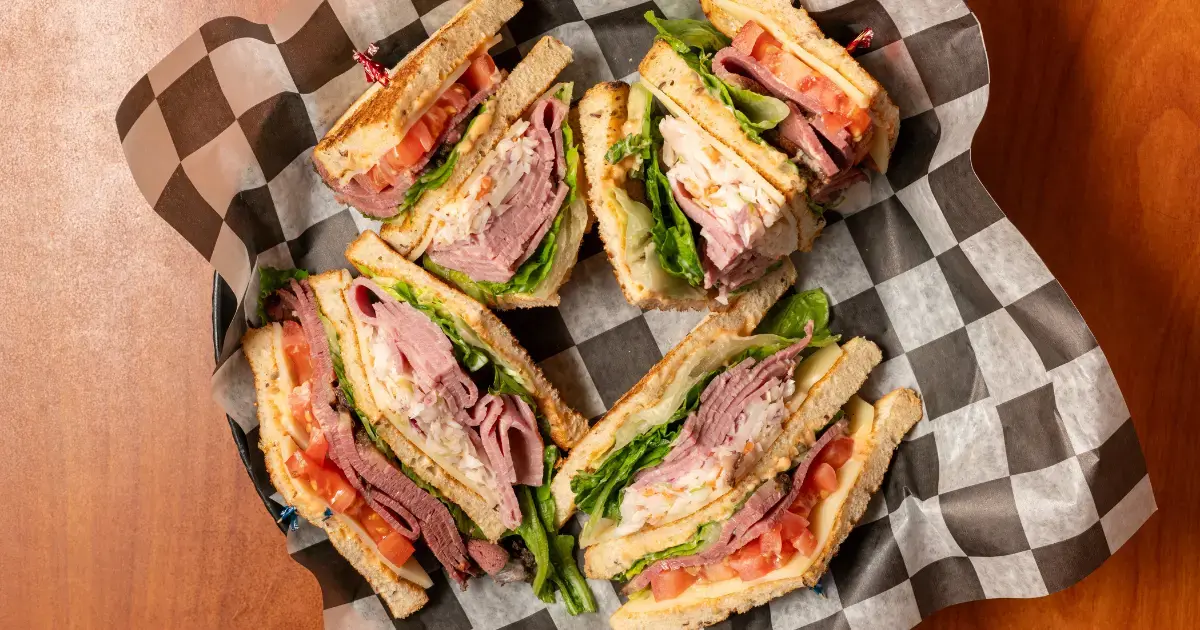


Best Grocery Store Management Software in 2026
Quick-service restaurants (QSRs) are seeing strong, sustained growth in 2026.
So, if you’ve been thinking about expanding your market’s offerings, adding a QSR counter might be an excellent move for your store.
But not without certain considerations — including having the right tools for the job.
You need a point of sale (POS) system that handles order modifications, routes tickets to the kitchen, tracks ingredients, and rings up a hot meal alongside a bag of groceries.
In this blog, we cover everything you need to know about adding quick-service capabilities to your market, including five of the best POS systems for quick-service restaurants, so you can find the right fit for your business.
Jump to providers:
Let’s dive in.
Why Add a QSR Counter to Your Market?
Shoppers increasingly want stores that solve the daily question of what’s for dinner — and a prepared food program positions your market to do exactly that.
When done right, adding QSR to your market can:
- Grow your average transaction size by giving customers the option to shop for both grocery staples and ready-to-eat options.
- Boost traffic, especially during weekday lunch and dinner rushes.
- Stand out from competitors by offering meals tied to your store’s niche (e.g., house-made dishes, international favorites, locally-sourced items).
- Improve per-item margins, since many single-serve items (e.g., bottled juice, coffee, desserts) have higher margins than most packaged groceries.
Meeting those customer expectations, however, requires an organized system behind the scenes — one that handles both sides of your operation seamlessly.
Must-Have Features in a QSR POS System
Not all POS systems support food service, and even fewer handle the hybrid grocery-plus-QSR model.
Before you start scheduling demos, make sure any system you evaluate supports:
- Menu management: Update items, prices, and daily specials in real time directly from your POS.
- Order modifiers: Denote special requests and dietary preferences at the counter and send them straight to the kitchen.
- Kitchen printing or display: Route orders and modifications directly to a kitchen printer or display immediately after a transaction.
- Flexible payments: Accept card, cash, contactless, and mobile pay.
- Inventory tracking: Monitor ingredient-level stock so you know what’s running low before service starts.
- Employee management: Track hours, manage shift scheduling, and set role-based access across your team.
When you’re demoing systems, ask each provider to walk you through a full order flow — from taking a modified item at the counter to watching it appear on the kitchen display.
Related Read: 5 QSR Management Tips for Grocery Stores
If a system can’t demonstrate all six of the above in a live environment, it might not be the best fit for QSR.
5 Best POS Systems for Quick-Service Restaurants
Every QSR has different hardware requirements, volume, and operational complexity. The five systems below are some of the most popular options currently on the market, each with a specific fit.
1. Markt POS
Best for: Independent grocers, natural food stores, and grocerants that need one system for their grocery floor and prepared foods counter
Markt POS is the only system on this list purpose-built for the grocery-QSR hybrid. Rather than adapting a restaurant POS to a grocery context, Markt POS natively handles both.
Grocery inventory, deli sales, prepared food orders, and kitchen printing are all housed within a single intuitive platform, so your reporting and stock levels are always accurate.
Standout features include:
- Deli scale integration: Sync pricing and product data directly to deli scales via ePlum for accurate weight-based pricing.
- Combined reporting: View sales from your grocery floor and QSR counter in a single report, with cloud-based access from anywhere.
- Kitchen receipt printing: Route orders and all modifications to the kitchen the moment a transaction completes.
- Configurable tipping workflows: Implement different tipping prompts by register so your QSR cashier and grocery checkout operate independently.
- Touchscreen picture gallery: Set up QSR menus as a category-and-image layout so staff can quickly find and ring up prepared food items.
Pricing: Plans start at $49/month, with custom solutions available based on your business size and operational needs.
2. Toast POS
Best for: High-volume delis and food stations that need restaurant-grade hardware
Toast POS is a restaurant-first system with a strong feature set and hardware built specifically for commercial food service.
Bonus Resource: Markt POS vs. Toast: Which is best for your neighborhood market?
It’s a solid option for grocery delis or prepared food counters that operate more like standalone quick-service restaurants, with high volume, multiple stations, and a need for devices that can handle the physical demands of a working kitchen.
Standout features include:
- Self-ordering kiosks: Let guests place, customize, and pay for orders independently, with modifier prompts routing directly to the kitchen display.
- Mobile order and payments: Give shoppers the option to order and pay from their phones.
- Robust hardware: Get spill-proof, heat-resistant terminals built to withstand temperatures up to 120°F, with a processor designed to last up to 10 years.
- Built-in cellular backup: Keep orders and payments processing even when the internet goes down.
Pricing: Plans start at $0/month for their Starter Kit, which has more limited capabilities. Their Point of Sale plan starts at $69/month.
3. Square
Best for: Smaller grocers and co-ops that want a low-cost, no-contract starting point
Square is a practical starting point for smaller grocery operations that want QSR functionality without a long-term contract or complex onboarding.
Their system covers prepared food menus, kitchen routing, and flexible payments across both retail and restaurant environments — with a free base plan that lets you get started without a large upfront investment.
Standout features include:
- Unified order management: Organize in-house, online, delivery, and QR code orders into a single view.
- Ingredient-level inventory tracking: Track stock in real time and sync with the menu so staff never sell an unavailable item.
- Offline payments: Accept all payment types offline and processes automatically when the device reconnects.
- Third-party delivery integrations: Connect directly with DoorDash and Uber Eats from the same platform.
Pricing: Square offers a free plan at no monthly cost, with their Plus plan at $49/month per location and Premium plan at $149/month per location.
4. Clover POS
Best for: Grocers that need flexible hardware across multiple service points
Clover’s hardware lineup is one of its strongest selling points — the range of device sizes and form factors makes it practical for businesses that need a countertop register at the grocery checkout and a smaller or mobile device at the deli counter.
The trade-off is that restaurant plans require a 36-month contract, and add-ons increase the monthly cost.
Standout features include:
- Varied hardware options: Choose from Station Solo, Station Duo, Clover Mini, or Flex handheld to configure different devices at different service points across your store.
- App marketplace: Add loyalty, marketing, and reporting features on top of your base plan.
- Customizable sales reporting: Filter reports by item, employee, time of day, and sales category directly from the Clover Dashboard or mobile app.
- PLU code support: Set up fast lookup screens so staff can ring up non-barcoded deli items quickly.
Pricing: Quick-service restaurant plans start at $135/month on a 36-month contract.
5. Lightspeed Restaurant
Best for: Multilocation grocers who need centralized management and advanced reporting
Lightspeed is a good solution for operators already running multiple locations or with plans to grow, with its multilocation management tools, advanced inventory, and customer relationship management (CRM) capabilities.
Additionally, the platform includes cross-location reporting and centralized menu control well, making it a reasonable fit for grocers who need to manage QSR across multiple sites.
Standout features include:
- QR code ordering: Provide scannable QR code menus for customers to browse, order, and pay from their phone.
- Automated price scheduling: Set different price lists by time or location for happy hours or multisite pricing.
- Ingredient-level inventory tracking: Monitor stock down to the ingredient with real-time cost and margin visibility.
- Multilocation management: Control menus, inventory, and pricing across every location from one backend.
Pricing: Plans start at $69/month. Plans that include multilocation management, CRM and loyalty, online ordering, and advanced inventory start at $189/month.
Get the Best POS System for Your Quick-Service Restaurant
Adding a prepared food program to your market is one of the more tangible ways to grow revenue, pull in new traffic, and give customers a reason to choose your store over a competitor.
But the opportunity only pays off if the operation behind it runs well — and that starts with having the right system in place.
Markt POS is the ideal solution for grocery-QSR hybrids, with native support for deli scale integration, configurable tipping by register, kitchen receipt printing, dual pricing, and combined reporting.
Schedule a personalized demo today to see how Markt POS handles your grocery floor and QSR counter in one easy-to-use platform.


Luke has been in the grocery industry for 15 years. Starting out as a POS technician, he worked his way up to VP. Luke has seen, adopted, and even contributed to significant technological advancements, such as moving from server-based systems to cloud solutions with Markt POS and the AI revolution transforming store operations. Luke is our resident expert for all things grocery store and point of sale technology. “Store owners spend too much time on paperwork instead of building their business. After helping my best friend's father run his grocery store, I made it my mission to give hardworking store owners better tools to succeed.”