Pricing
hero-02

Grocery Retail 2026: Key Statistics and Trends

Independent grocers are experiencing stable growth and financial strain at the same time. Year-over-year sales are up — but so are inventory costs, operating expenses, and competitive pressure from big-box chains.

To see how grocers are managing this tension, we surveyed over 100 business owners and analyzed data from nearly 450 stores to discover their challenges, opportunities, and goals.
We’ll take an in-depth look at what we found, but let’s start with some key takeaways:

  • Fragile growth: Grocery stores’ revenue and basket sizes are up slightly, but transaction volume is lagging behind — revealing growth driven primarily by price changes.

  • Rising pressures: Grocers cite rising costs, big-box competition from supermarkets, and operational stressors as their biggest challenges.

  • New opportunities: Grocers who sell prepared foods, have loyalty programs, and embrace e-commerce are weathering these challenges better than those who don’t.

  • Future outlook: In 2026, grocers will focus on investing in technology to help them boost profit margins, curate their product selection, and eliminate manual tasks.

State of the Grocery Industry: Fragile Growth

November 2024 vs. 2025

Total GPV

▲ +5.8%
2024 $85.4M
2025 $90.3M

Transactions

▲ +2.4%
2024 2.79M
2025 2.86M

Avg. Basket

▲ +3.3%
2024 $30.56
2025 $31.55

December 2024 vs. 2025

Total GPV

▲ +5.4%
2024 $93.4M
2025 $98.4

Transactions

▲ +1.4%
2024 2.86M
2025 2.9M

Avg. Basket

▲ +3.9%
2024 $32.70
2025 $33.98

We looked at aggregated, anonymized data from 447 grocery stores and surveyed 107 grocery store owners.

Year over year, grocery stores experienced moderate growth, with a 5.4–5.8% increase in overall sales revenue and a 3–4% increase in basket sizes. However, the total number of transactions only increased 1% — revealing that this growth was driven primarily by inflation-related higher prices.

The takeaway: Grocery store sales are steady, but owners still feel significant financial pressure from rising inventory and operating costs, tariffs, supply chain disruptions, and competition with big-box supermarket chains.

3 Types of Stores, Challenges, & Goals

Independent grocery stores and local markets are unique, and so are the pressures they face. Our survey data revealed that grocers fall into three categories when it comes to their challenges and goals.

Where does your store fit?

Grocers chasing big growth goals
31% of grocers
These grocers already have a loyalty program and sell online, and they’re 100% committed to increasing their sales. Since they’ve already overcome challenges like shoplifting and financing, their number-one focus is crushing the competition. They’re experimenting with AI, fine-tuning their margins, and expanding their product selections.
Recommendations

Experiment with AI tools to make smart inventory and pricing decisions. 

Expand product selection — specifically prepared foods and private-label items — to compete with big-box stores. 

Use digital marketing to win new customers.

Grocers nailing down their operations
39% of grocers

These grocers are focused on building systems, product selections, and tech stacks that save them money and prepare them for future growth. Their main challenge is high operating costs. They haven’t yet embraced e-commerce or customer loyalty, but it’s the next step in their plan.

Recommendations

Launch a customer loyalty program.

Start a simple, pickup-only online store.

Invest in electronic shelf labels.

Experiment with AI inventory tools to reduce spoilage and protect margins.

Grocers building the foundation
28% of grocers

These grocers are still figuring out what works for their business. They haven’t launched prepared foods, e-commerce, or a customer loyalty program — mostly because they don’t feel like they have the knowledge or resources to do so.

Recommendations

Upgrade to a modern grocery POS solution that includes a built-in loyalty program.

Choose a grocery POS provider that offers support and resources.

Start selling a few simple prepared foods, like wraps and sandwiches.

What Are Grocers’ Biggest Challenges Right Now?

We asked grocers about the biggest challenges they’re facing right now, and their answers revealed a “triple squeeze” on their profit margins. 

Rising costs

Rising and uncertain costs were the overwhelming concern for grocers, with 74% expressing worry about inflation and 47% citing tariffs and supply chain issues.

Big-box competition

Many grocers (44%) worry they can’t compete against national supermarket chains’ higher purchasing power and economies of scale.

Operational issues

Paying operating expenses is a challenge for 36% of grocers, and another 35% report trouble hiring and keeping employees.

What do you see as the biggest challenges in grocery going into 2026?
Inflation and rising cost of goods
74%
Tariffs and supply chain disruptions
47%
Competition with large chains
44%
Paying operating expenses
36%
Hiring and keeping employees
35%
Retaining customers
21%
Theft and shrinkage
19%
Lack of store data
10%
Obtaining financing
8%
Food safety concerns
8%
Vendor relationships
7%

Climbing inventory costs, competitive pressure, and rising operational expenses all threaten independent grocery stores’ profit margins — as well as their reputation. Here’s what one survey respondent said:

“The rising cost of operations and especially the inflation on the products are the worst. The problem is that the customers blame the grocery store for this.”

How Are Grocers Adapting?

These grocery store challenges are real, but future-forward owners are finding ways to overcome them. Our survey revealed three key ways grocers are adapting to meet customer needs, compete with big-name brands, and stay profitable despite the pressure.

Offering More Prepared Foods

Many grocers have begun selling prepared foods like grab-and-go deli meals, made-to-order entrees, and preportioned meal kits.
Prepared food popularity in independent grocery stores 
83%
57%
34%
Deli and grab-and-go meals
Hot, made-to-order meals
Preportioned meal kits

Among grocers selling prepared foods, 56% report that sales have grown, with 14% saying they’ve seen more than a 20% increase.

Grocers say these offerings help them compete with big-box supermarkets, casual restaurants, and meal delivery services:

"It is challenging to compete with the big chains on price, so we compete by offering locally-sourced products, excellent customer service, and items not sold in big chain stores."

For grocers who don’t sell prepared foods, the barrier isn’t demand — it’s infrastructure. These owners say they don’t have adequate kitchen and food preparation facilities (83%) or that selling these items is too complicated to manage (20%).

Fortunately, simple grab-and-go options like premade deli sandwiches, wraps, and salads are popular options that require minimal cooking and preparation. Kitchen-less grocers can also put together meal kits featuring overstocked meats, produce, and sides to fill an important market gap.

The takeaway: Prepared foods are a proven differentiator for independent grocery stores, but selling them comes with challenges. Sellers need adequate kitchen facilities, inventory tools to keep food waste low, and point of sale (POS) software designed to handle made-to-order meals. 

Launching Loyalty Programs

Our survey result revealed one factor that made a significant difference in grocers’ mindsets: whether or not they have a loyalty program.

For example, loyalty program adopters are less worried about inflation and rising costs, but they’re more concerned about competing with big-box grocery chains. In other words, they’ve moved beyond survival and are looking ahead, embracing a more proactive strategy when it comes to expanding their businesses.

This mindset shift is even clearer when we look at grocers’ goals.

Goal Grocers with loyalty programs Grocers without loyalty programs
More marketing 62% 46%
Hire more employees 29% 17%
Open a new location 19% 9%
Increase revenue 100% 94%

Loyalty program adopters don’t just have lofty goals — they’re seeing real increases in their revenue. Here’s how adopters responded when we asked them about the benefits of running a loyalty program:

  • 67% reported higher customer retention.
  • 62% reported higher sales.
  • 52% said it’s easier to connect with customers.
  • 24% said it helps them compete with big-box stores.

Despite these benefits, only 20% of independent grocery stores actually have a customer loyalty program — with non-adopters citing barriers like complexity, uncertainty, and cost.

The takeaway: Loyalty programs are an underutilized marketing strategy among independent grocers, but grocery stores with loyalty programs are better positioned to withstand rising costs and pursue more ambitious goals — from winning more customers to opening new locations. 

Selling Online

Grocers that embrace e-commerce are in a fundamentally different position than their in-store-only counterparts. They’re significantly less pressured by the “triple squeeze” and other financial stressors like shrinkage or securing funding. Let’s take a look.

Challenge Omnichannel grocers Offline-only grocers
Big-chain competition 33% 56%
Theft/shrinkage 6% 25%
Obtaining financing 0% 14%

This is because selling online gives independent grocers a way to keep up with their big-chain competitors and set themselves apart from other local markets. They’ve unlocked new revenue streams, freed themselves from in-store price wars, and reached new groups of customers. Here’s why one grocer opted to expand their store digitally:

"As a rural grocery and deli, we don't have a large demographic to market to. These individuals can drive 10 miles to a chain grocery to get their items, but the 'local general store' is closer, but more expensive."

Despite the major advantages of selling both online and in store, only 17% of grocers have adopted an omnichannel approach. However, 27% said they plan to start selling online sometime in the next year.

The takeaway: Offering pickup and delivery is a huge competitive advantage for grocers. Right now, there are only a few independent grocery stores in the e-commerce space, but expect to see more by the end of 2026.

The Digital Divide: Why Tech-Forward Grocers Are Thriving

Technology isn’t just for the grocery giants — it’s becoming more and more important for independent grocery stores.

New, AI-powered POS features are developing rapidly to help grocers take on their toughest challenges, including:

icon-1

Margin squeeze

Improved reporting features help grocers audit their departments and products, identify their most profitable products, and spot where they’re losing money — without spending hours in the back office staring at spreadsheets.
icon-c-5

Inventory challenges

Spoilage and stockouts are less inevitable now that modern grocery POS systems include features like advanced inventory forecasting, automated purchase orders, and AI inventory scanning.

icon-a

E-commerce barriers

Selling online doesn’t require a computer science degree anymore. Tech-savvy grocers are taking advantage of their POS system’s e-commerce integration to sync their inventory and turn a profit on every online order.

icon-c-4

Loyalty program hassles

Many grocers avoid starting a loyalty program because of complexity and cost fears, but industry-standard POS systems now include a built-in program to make it a breeze.

Grocers with updated technology that includes these features are thriving, but stores without these advantages risk being left behind. Their competitors fare better when it comes to big-box competition, weathering economic changes, and simply attracting loyal customers. 

To learn more about how grocers see the role of tech in their stores, we asked them how they would spend $10,000 on upgrading their technology setup. Among their top answers were customer loyalty tools, e-commerce platforms, and POS upgrades to help them better manage inventory and sales data. 

How would you spend $10,000 on new technology?
AI inventory and back-office tools
25%
POS software upgrades
22%
Customer loyalty and retention tools
21%
E-commerce and web store upgrades
21%
New registers and touchscreens
20%
Electronic shelf labels
20%
The takeaway: Grocery store technology is getting more advanced and becoming more essential. AI-powered tools make it easier for grocers to protect their margins, save time, and make more sales. Without them, analog stores could be left behind. 

Rising Costs, Margin Squeeze, and How Technology Can Reduce the Pressure

You and your customers have almost certainly noticed that prices are on the rise. Your customers are paying more to fill their refrigerators and pantries — and you’re paying more to stock the shelves.

With the wholesale prices of meat, dairy, and produce changing nearly every day, some grocers are finding it impossible to track their margins and protect their profits. This is even clearer when we look at till data: Increased revenue and flat transaction volume reveal the struggle to keep sticker prices in line with wholesale costs.

That’s why tech-forward POS providers and grocers are creating and leveraging AI-powered margin management tools. These make it easy to sync vendor data, track changing prices, automatically calculate margins, and adjust prices in seconds.

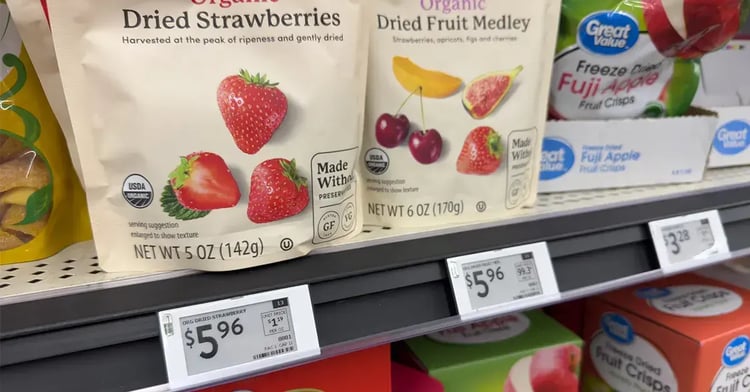
These features work especially well for grocery stores with electronic shelf labels (ESLs). When you notice a new wholesale price, you can adjust the sticker price with just a few clicks to ensure you turn a healthy profit on every single transaction.

www.itretail.comhubfsBlog Featured ImagesIT Retail Blogelectronic-shelf-labels-cost

The Goals Grocers Are Chasing in 2026

Now, let’s look ahead. We asked grocers about the goals they’re working toward in 2026, and their answers revealed two major trends: Some grocers are focused on growing and expanding their businesses, while others are focused on increasing their operational efficiency.

Let’s look at these two goal categories — plus our recommendations to help grocers achieve them. 

More Revenue, More Customers, More Sales Channels

The vast majority of independent grocers are focused on growth. They want to bring more customers through the door and unlock new revenue — primarily through marketing, but also by selling online or opening new locations.

What are your biggest goals going into 2026?

Increase sales and revenue 81%
Bring in new customers 65%
Do more marketing 43%
Start selling online 22%
Open a new location 9%

Do these goals sound familiar? Here's how grocers like you are working to achieve them: 

Launch a loyalty program

This is an easy win that’s proven to help independent grocers generate repeat business and make more sales. Your loyalty program doesn’t have to be complicated — a simple point-based system like the one included in Markt POS can make a huge difference for your store and only takes a few minutes to set up. 

Experiment with e-commerce

The data is clear —selling online is worth the effort. With Instacart, you can rely on their existing technology, customer base, and shoppers/drivers to fulfill orders, but keep in mind that they charge a commission fee on all sales. Markt POS’ integrated e-commerce is another option that allows you to create an online grocery store and protect your margins.

Expand your prepared food offerings

Offering a convenient meal alongside grocery staples helps you compete with big-box supermarkets. Plus, it gives customers a reason to visit your store more often. Deli grab-and-go entrees like premade sandwiches, wraps, and salads are an easy start with minimal kitchen prep needs. Meal kits represent another easy win for independent grocery stores, helping you compete with grocery delivery services.

Offer personalized promos

Big chains are already sending personalized discounts and coupons to customers via email and SMS — but they’re not the only ones with this power. Independent grocers can use their POS system data and built-in marketing features to segment customers and send tailored promotions right to their inboxes. This helps you make the most of your marketing budget and efforts.

Fewer Manual Tasks, Less Food Waste, Simpler Operations

Other grocers are more focused on improving their current operations. These business owners are frustrated by high shrinkage rates, time-consuming manual tasks, and outdated technology. 
What are your biggest goals going into 2026?
Reduced manual tasks 33%
Reduced food waste 31%
Updated technology 25%

The number-one way to achieve these goals is to upgrade your grocery store’s POS system. There’s no way around it: This can be a hassle and a significant expense, but it pays for itself in the long run. Let’s look at how:

AI-driven reporting and analytics

AI-driven reporting and analytics help you audit your store’s departments and products without combing through cluttered spreadsheets, helping you identify profitable areas and spot where you’re losing money.

Inventory automation tools

Inventory automation tools eliminate manual, time-consuming tasks associated with purchase orders and receiving. For example, AI invoice scanning allows you to update your inventory records within seconds after receiving a new shipment.

Electronic shelf labels

Electronic shelf labels empower you to respond quickly to inflation and tariff-related cost changes, protecting profit margins and saving you time.

Self-checkout

Self-checkout helps you maintain short checkout lines with fewer employees — reducing overhead and boosting customer satisfaction.

Built-in loyalty program and marketing tools

A built-in loyalty program and marketing tools help you attract and retain customers on a tight budget — no need to invest in additional tools or manage complex marketing campaigns.

E-commerce integration

E-commerce integration reduces the barrier to entry for offering delivery and pickup. There’s no need to manage multiple systems, update pricing in two different places, or reconcile inventory records — it’s all managed right from your POS system.



